

I have brewed thousands of cups, and I learned early that inconsistent coffee comes from inconsistent measuring. When the scoop changes from day to day, flavor suffers. Strength shifts. Good beans get wasted.
In this guide, I break down clear coffee-to-water ratios for each brewing method and explain how measurement affects taste, body, and balance. Follow these principles, and you will stop guessing and start brewing coffee that tastes right every single time.
Understanding Coffee-to-Water Ratio
To achieve the perfect cup of coffee, it’s essential to understand the coffee-to-water ratio, which is the amount of ground coffee needed for every unit of water.
What Is A Coffee-to-water Ratio?
A coffee-to-water ratio is a crucial element in brewing the perfect cup of coffee. It refers to the proportion of ground coffee to water, dictating how strong or weak your final brew will be.
For example, using too little coffee for a given amount of water can result in a disappointingly weak and watery beverage. On the other hand, too much coffee could produce an overpowering and bitter taste.
Finding just the right balance is key to achieving that ideal cup of joe we all strive for each morning. Generally speaking, one scoop (about 2 tablespoons) of ground coffee per 6 ounces of water is recommended as a starting point for most brewing methods; however, personal preferences may vary.
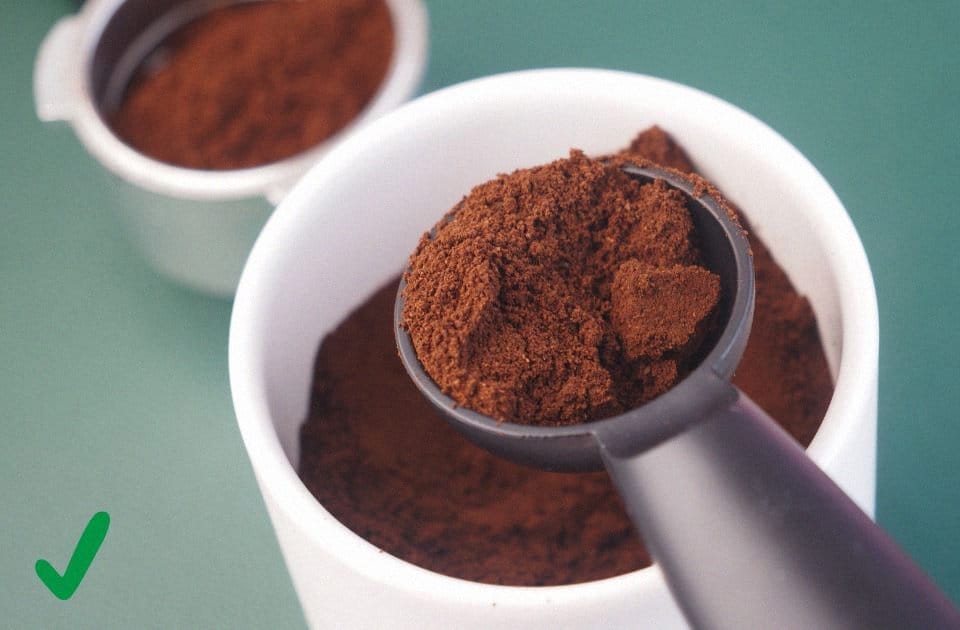
How I Measure Coffee for Different Brewing Method
After years working behind the bar and testing brews at home, I stopped relying on guesswork. Good coffee starts with accurate measurement, and every brewing method asks for a slightly different approach.
I always begin with weight, then convert to scoops only when a scale is not available. This keeps flavor consistent and avoids weak or bitter results.
Drip Coffee
Drip machines are sensitive to small changes. I see this daily during morning rush hours.
- Ratio I use: 1:15 by weight
- Practical measure: 20 g coffee per 300 ml water
- Scoop equivalent: 1 level scoop per 6 to 7 oz
Medium grind works best. When coffee tastes flat, I adjust grind size before adding more coffee.
French Press
French press rewards patience and the right grind.
- Ratio I use: 1:14
- Practical measure: 30 g coffee per 420 ml water
- Scoop equivalent: 2 scoops per 14 oz
Coarse grind matters more here than extra coffee. Overdosing only adds bitterness.
Pro tip: Stir once after pouring water, then leave it alone. Too much agitation creates sludge.
Espresso
Espresso never relies on scoops. Every serious barista learns this fast.
- Dose: 18 to 20 g coffee
- Yield: 36 to 40 g liquid espresso
- Brew time: 25 to 30 seconds
I dial espresso by taste and flow, not volume. Scoops introduce error and should be avoided.
Cold Brew
Cold brew needs structure or it turns dull.
- Ratio I use: 1:4 by weight for concentrate
- Example: 100 g coffee to 400 ml water
After brewing, I dilute it 1:1 with water or milk before serving.
Fun fact: Cold brew extracts fewer bitter compounds, which is why it tastes smoother even when strong.
Ideal Ratios for Different Coffee Brewing Methods
Over time, I narrowed everything down to one reliable baseline and adjust from there.
My starting point
- 1:15 coffee to water by weight
From that baseline, each method shifts slightly based on extraction style.
- Drip coffee: 1:15
- French press: 1:14
- Espresso: 1:2 brew ratio
- Cold brew concentrate: 1:4
These ratios deliver balance before personal preference comes into play.
Chart of Ratios for Different Brewing Methods
| Brewing Method | Coffee (grams) | Water (ml) | Scoop Equivalent | Notes |
|---|---|---|---|---|
| Drip Coffee | 20 g | 300 ml | 1 scoop | Clean and balanced |
| French Press | 30 g | 420 ml | 2 scoops | Full body |
| Espresso | 18–20 g | 36–40 g output | Not recommended | Weight only |
| Cold Brew | 100 g | 400 ml | 8–9 scoops | Dilute before drinking |
This table is the reference point I rely on when training new baristas.
Scoop vs Tablespoon Clarification
This is where most home brewers go wrong.
Here is the reality
- 1 standard coffee scoop = 2 level tablespoons
- Equals roughly 10 to 12 grams, depending on roast and grind
Scoops vary by brand. Roast density changes weight. This is why scales win every time.
Pro tip: Always level the scoop. Rounded scoops create uneven extraction fast.
Scoop-Based Measurement Examples (Practical Guidance)
When a scale is not available, I use these approximations and stay consistent.
- 1 cup drip coffee (6 oz): 1 scoop
- 6 cups drip coffee: 6 scoops
- 8 cups drip coffee: 8 scoops
- 12 cups drip coffee: 12 scoops
These assume a standard 5 to 6 oz drip machine cup. If your machine uses larger cups, increase coffee slightly rather than guessing.
Factors That Affect Coffee Strength
The strength of coffee is impacted by various factors, including the type of coffee bean used, grind size and consistency, as well as the brewing method and equipment.
The Type Of Coffee Bean
The type of coffee bean you choose can have a significant impact on the strength and flavor of your coffee. Arabica beans, for example, are generally regarded as higher quality and produce a smoother taste with less bitterness.
Robusta beans, on the other hand, tend to have a stronger, more bitter flavor and higher caffeine content. Whether you prefer a bold espresso or a milder drip coffee will depend largely on which variety of bean you use.
Grind Size And Consistency
Another important factor that affects the strength and taste of your coffee is the grind size and consistency. Different brewing methods require different grind sizes to achieve optimal flavor extraction.
Consistency is also key when it comes to grinding your coffee beans. A consistent size ensures that each ground particle has maximum surface area exposed to the water during brewing, resulting in an even and flavorful cup of coffee.
To ensure you’re using the right grind size and consistency for your preferred brewing method, check the manufacturer’s instructions on your grinder or experiment with different settings until you find one that works best for you.
By paying attention to these factors, along with measuring out the correct amount of grounds per cup using a standard scoop or kitchen scale as outlined above, you’ll be able to achieve consistently great-tasting cups of coffee every time.
Brewing Method And Equipment
The brewing method and equipment you use to make coffee can greatly affect the strength and taste of your cup. For example, brewing with a French press requires a coarser grind size compared to drip coffee, which needs a finer grind for optimal flavor extraction.
Additionally, the type of filter used can also impact the final product – paper filters typically produce a clearer cup than metal or cloth filters.
Ultimately, finding the right combination of brewing method and equipment takes experimentation and personal preference into account but sticking to ideal ratios based on specific methods is always important when aiming for consistent results.
Accurately Measuring Coffee
To accurately measure coffee, it is recommended to use standard measurements for coffee scoops or tablespoons or a kitchen scale for more precision.
Standard Measurements For Coffee Scoops And Tablespoons
Understanding the standard measurements for coffee scoops and tablespoons is essential in making the perfect cup of coffee. Here’s an easy-to-follow table that outlines the standard measurements for both scoops and tablespoons:
| Coffee Measurement | Amount | Description |
|---|---|---|
| 1 coffee scoop | 2 tablespoons | A level coffee scoop holds approximately 2 tablespoons of coffee, which is the general recommendation for a strong cup of coffee. |
| 1 tablespoon | 0.5 coffee scoop | If you prefer a milder cup of coffee, use half a coffee scoop or 1 tablespoon of coffee per 6 fluid ounces of water. |
Remember that these measurements are a starting point, and you may need to adjust the amount of coffee you use based on the type of coffee bean, grind size, brewing method, and personal taste preference.
Using A Kitchen Scale For More Precision
If you want to be even more precise with your coffee measurements, consider using a kitchen scale. This method is especially helpful if you’re grinding whole-bean coffee yourself.
A digital kitchen scale can accurately measure out the grams of coffee needed for each cup based on the recommended ratios for different brewing methods. For example, a common ratio for drip coffee is 10-15 grams of coffee per 6 ounces of water.
Using a scale ensures that you are getting the exact amount of grounds needed for a consistent and delicious cup every time. It also allows you to experiment with different ratios until you find what works best for your taste buds.
Adjusting Coffee Measurements Based On Personal Taste Preference
It is important to keep in mind that the standard coffee-to-water ratios are just guidelines, and personal taste preferences may differ. Some people prefer a stronger cup of coffee and may opt to use more scoops or tablespoons of coffee than recommended, while others prefer a weaker brew with less coffee per cup.
For example, if using a French press, the recommended ratio is 1:14 (1 part coffee to 14 parts water) or about 7 grams of coffee per cup. However, if you prefer a stronger cup of coffee with more body and flavor, you can add an extra scoop or tablespoon of ground coffee per cup.
Remember that adjusting measurements can greatly affect your brewed coffee’s overall quality and taste.
Chart Of Ratios For Different Brewing Methods (Drip Coffee, French Press, Espresso, Cold Brew)
Understanding the correct coffee-to-water ratio for different brewing methods is essential for crafting the perfect cup of coffee. Below is a chart that provides the ideal ratios for various popular brewing methods, including drip coffee, French press, espresso, and cold brew.
| Brewing Method | Coffee | Water |
|---|---|---|
| Drip Coffee | 1 scoop (2 tbsp) | 6-8 fl oz |
| French Press | 1 scoop (2 tbsp) | 4 fl oz |
| Espresso | 1 scoop (2 tbsp) | 1 fl oz |
| Cold Brew | 1.5 scoops (3 tbsp) | 8 fl oz |
FAQs
Common questions about coffee measurements answered!
How Many Scoops Of Coffee For 12 Cups?
When brewing coffee for a crowd, it’s essential to know the correct measurements to ensure a perfect pot every time. For 12 cups of coffee, 18 tbsp-sized coffee scoops are recommended.
If you’re looking for stronger coffee, consider using one and a half or two scoops of coffee per six fluid ounces instead of the standard one scoop per six fluid ounces.
How Many Scoops Of Coffee For 6 Cups?
When brewing 6 cups of coffee, the ideal measurement is to use 6 scoops or tablespoons of ground coffee. This will result in a strong and flavorful cup of coffee that is not too overpowering.
How Many Scoops Of Coffee For 8 Cups?
When brewing 8 cups of coffee, you will need between 8-12 tablespoons or 4-6 scoops of ground coffee. However, this measurement can vary depending on personal preference and the type of equipment being used.
For example, drip coffee makers typically require one scoop of coffee per cup, which means using eight scoops for an 8-cup pot. On the other hand, French press brewing requires a coarser grind and a stronger ratio of coffee to water, so it may call for more scoops or tablespoons per cup to achieve the desired strength.
How Many Scoops Of Coffee Per Cup For Mr. Coffee?
When brewing coffee with a Mr. Coffee machine, it is recommended to use one scoop of ground coffee for every 8 ounces of water. A standard level scoop generally holds around 2 tablespoons of coffee grounds, so you can measure accordingly based on the number of cups you want to brew.
For example, if you’re making a full pot with twelve cups of water in your Mr. Coffee machine, you should use around 12 scoops or roughly 24 tablespoons of ground coffee for a strong cup.
How Many Tablespoons Of Coffee Per Cup For Drip Coffee?
When brewing coffee with a drip coffee maker, the general rule of thumb is to use one tablespoon of ground coffee for every six ounces of water. This means that if you are making a pot of coffee with 12 cups of water, you will need approximately 18 tablespoons or nine scoops of ground coffee.